
 September is National Preparedness Month, and while we all try to have plans for every possible situation, making sure your animals are part of those plans is incredibly important.
Our whole team has pets of their own, and many of us foster, too. That means we have to make sure we have up-to-date lists of the animals in our care and that we know what to do when disaster strikes.
Here are a few things you can do now to make sure your pets are included in your emergency plan.
Make sure your pet’s microchip is up to date
This is one of the most important things you can do.
Make sure your pet’s microchip has your current address, phone number, and contact information. An up-to-date microchip can be a lifesaver if your pet gets lost during an emergency.
Things can happen quickly. Your cat may slip out while you’re evacuating, or a door or window may be left open. If someone finds your cat and has their microchip scanned, having current information on file gives them a way to get your pet back to you.
A microchip is only helpful if the information connected to it is current, so take a few minutes to check yours.
Check your emergency animal sticker
When you adopted from Town Cats in the past year, you received an emergency animal sticker for your door or window as part of your adoption kit. If you did not get one, stop by the Town House and we can give you one!
Make sure yours is filled out and up to date, including the number and type of animals in your home.
These stickers can alert firefighters and other emergency responders that animals may be inside if something happens while you’re away. If the number of pets in your home changes, update your sticker to keep the information accurate.
Make carriers part of everyday life
Don’t wait until an emergency to bring out your cat’s carrier.
Megan, our Director of Development, leaves her carriers out 24/7, and Michelle leaves her foster carriers out so they are comfortable going in and out as needed. The cats play in them, lounge in them, and generally treat them like another piece of furniture. We also regularly give them treats in and around the carriers so they associate them with positive experiences.
That way, if I need to get them into their carriers quickly, they’re hopefully not immediately thinking, “Absolutely not.”
There can still be a fight. Cats are cats.
Keep a blanket or towel nearby that you can use if you need to safely wrap and handle a frightened cat. Make sure you know how to safely pick up your cat and place them into their carrier before an emergency happens.
If you have multiple cats, make sure you have enough carriers for everyone.
Know your cat’s hiding spots
You know your cat’s favorite hiding places. Write them down.
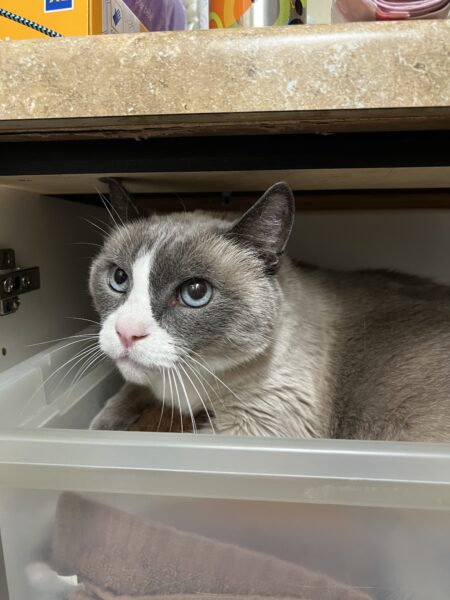
If you can’t find your cat during an emergency, check their usual hiding spots first. A frightened cat may not come when called and may hide. Knowing their favorite spots can also be helpful if firefighters or other emergency responders need to enter your home. If you have to leave because of a fire or another emergency, being able to tell responders, “My cat usually hides under the bed” or “My cat hides in the closet” gives them useful information about where they may be.
Of course, responders will determine what is safe and possible in the situation, but any information you can provide can help.
Have an emergency supply of food, water, and medications
If you need to evacuate because of a wildfire, flood, or another emergency, take your pets’ supplies with you.
We recommend having at least a week’s supply of food and plenty of water available, along with any medications your cat takes.
If you aren’t able to return home right away, having those supplies means you aren’t immediately trying to find food, medication, or other necessities in an unfamiliar area.
It’s also a good idea to keep veterinary records and medication information somewhere you can grab quickly.
Consider a collar and ID tag
A collar with an ID tag can give someone another way to identify your pet if it gets separated from you.
If your cat doesn’t normally wear a collar, keep a properly fitted collar and ID tag with your emergency supplies. You can put it on your cat when you’re safely preparing to leave. Your pet’s collar and ID tag should be considered an extra layer of identification, not a replacement for their microchip.
Keep a current photo of your pet
Make sure you have a recent, clear photo of each of your pets.
If your pet gets lost during an emergency, you’ll want a photo that clearly shows what they look like so you can quickly create lost-pet posts or share their information with shelters, animal control, neighbors, and others who may be helping search.
Know where you can go
If you need to evacuate, don’t wait until you’re packing the car to figure out where your pets can go. Research pet-friendly hotels, boarding facilities, friends or family members who could take your animals, and other options along possible evacuation routes.
Not every emergency shelter accepts pets, so knowing your options ahead of time can save you a lot of stress when you’re already dealing with an emergency.
And most importantly, don’t leave your pets behind. If it isn’t safe for you to stay, it isn’t safe for them either. Plan to evacuate together whenever possible.
Practice your plan
You don’t have to stage a full disaster drill in your living room, but it is worth thinking through what would actually happen.
What if you only had five minutes to leave?
What if you weren’t home?
What if your cats were hiding?
Can you get all of your pets into their carriers?
Can you get the carriers into your vehicle?
Do you know where you’re going?
Thinking through these questions now can make things much easier if you ever actually need to evacuate.
Our pets depend on us to make these plans for them. A disaster can be frightening and unpredictable, but having a plan can help you act quickly and keep your animals with you.
At Town Cats, we care deeply about keeping cats safe, not just while they’re in our care, but once they are home with their families, too.
Before September ends, take a few minutes to make sure your pets are part of your emergency plan. Check the microchip. Fill out the emergency sticker. Find the carriers. Check your supplies. Make a plan. Because when disaster strikes, we want to make sure our pets aren’t left behind.